
How to Know Your Skin Type: Easy At-Home Guide
How to know your skin type is the first step toward healthy, glowing skin. Many people, however, buy skincare products without understanding their skin type. As a result, breakouts, irritation, or dryness often appear. Therefore, learning how do I know my skin type is essential before starting any routine.
This guide shows simple, at-home methods that help you know your skin type. Moreover, these techniques are easy, require no special tools, and can be done from home.
Why It’s Important to Know Your Skin Type
Skin reacts differently depending on its type. For example, a moisturizer made for dry skin may cause oiliness in someone with oily skin. Similarly, harsh products can irritate sensitive skin.
Knowing how do I know my skin type helps you:
- Choose products that actually work
- Reduce acne, dryness, or irritation
- Save money by avoiding unsuitable products
- Build a skincare routine that fits your needs
Consequently, by following a routine based on your skin type, your overall skin health improves. In addition, it prevents long-term skin issues.
Main Skin Types You Should Know
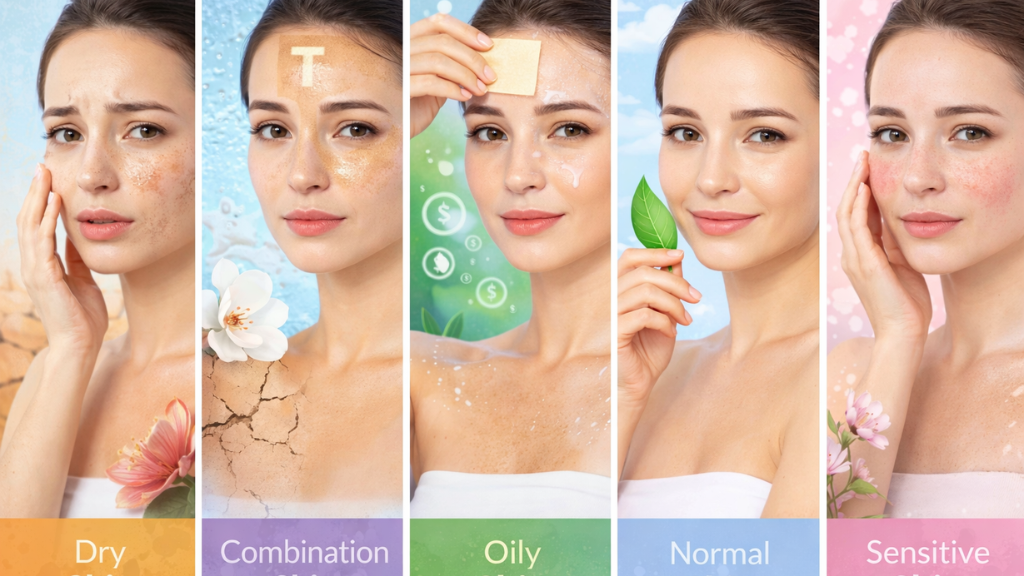
Before testing your skin, understanding the basic categories is necessary. Generally, skin types are divided into five groups:
Normal Skin
Normal skin feels balanced, neither too oily nor too dry. Breakouts are rare, and pores appear small. Therefore, it is the easiest skin type to maintain.
Oily Skin
Oily skin produces extra sebum. Shine often appears on the forehead, nose, and chin. Large pores may be visible, and acne is more likely. However, proper cleansing and non-comedogenic products help control oil.
Dry Skin
Dry skin feels tight and may appear flaky. Fine lines may show earlier than in other skin types. In addition, rich moisturizers help maintain hydration.
Combination Skin
Combination skin shows both oily and dry areas. Typically, the T-zone (forehead, nose, chin) is oily, while the cheeks stay dry. Therefore, a balanced skincare routine is recommended.
Sensitive Skin
Sensitive skin reacts easily to products, weather, or environmental factors. Redness, itching, or burning may occur. Hence, gentle formulations are essential to avoid irritation.
Simple Methods to Know Your Skin Type at Home
Many people ask, how do I know my skin type without visiting a dermatologist? Fortunately, several simple methods provide reliable results. Moreover, these methods do not require professional tools.
Bare Face Method to Know Your Skin Type
This method is widely considered the most accurate.
Steps:
- First, wash your face gently using a mild cleanser.
- Then, pat dry with a soft towel.
- Wait for 30–60 minutes without applying any product.
Observation:
- Comfortable skin → normal
- Shiny skin all over → oily
- Tight or flaky → dry
- Oily T-zone, dry cheeks → combination
- Redness or irritation → sensitive
Therefore, by following this method, you can clearly know your skin type. In addition, this method is safe and beginner-friendly.
Blotting Paper Test to Know Your Skin Type
Another easy method involves blotting paper.
Steps:
- Press a clean tissue on your forehead, nose, cheeks, and chin.
- Observe how much oil is absorbed.
Results:
- Oil on all areas → oily skin
- Little or no oil → dry skin
- Oil only on T-zone → combination skin
This test complements the bare face method. Moreover, it helps confirm your observations.
Daily Observation to Know Your Skin Type
Observing your skin over several days is another effective approach.
Pay attention to:
- Shine during the day
- Tightness after washing
- Reaction to skincare products
- Breakout patterns
By doing this, you can better answer how do I know my skin type. In addition, combining it with other methods improves accuracy.
Skin Changes and Seasonal Effects
Skin may change with weather, hormones, or stress. For instance, summer increases oil production, while winter can make skin feel dry. However, these changes do not mean your skin type has permanently changed. Hence, focus on your skin’s behavior most of the year. As a result, you can consistently know your skin type.
Common Mistakes While Identifying Skin Type
People often make mistakes that lead to wrong conclusions:
- Testing immediately after washing
- Using harsh cleansers before testing
- Confusing dehydration with dry skin
- Testing during acne flare-ups
Avoiding these errors ensures accurate identification. Consequently, your skincare routine becomes more effective. In addition, it reduces wasted effort on unsuitable products.
Difference Between Dry and Dehydrated Skin
Many people confuse dry skin with dehydrated skin.
- Dry skin lacks oil
- Dehydrated skin lacks water
Even oily skin can feel tight if dehydrated. Therefore, understanding this difference is essential to correctly know your skin type and choose the right products.
Recommended Skincare Products After You Know Your Skin Type
Once you know your skin type, choosing the right daily products becomes essential. Here are some top Amazon picks (affiliate links):
- L’Oréal Paris Glycolic Bright Skin Serum
This serum improves skin texture and radiance. It suits most skin types and works best after identifying your skin type. In addition, it can be included in morning or night routines. - Mamaearth Rice Face Wash
A gentle face wash ideal for daily cleansing. Works on normal, dry, and sensitive skin. Moreover, it keeps skin clean without causing dryness.
Including these products in your routine ensures your skincare is effective and tailored to your needs.
Using Skin Type Knowledge in Skincare
Once your skin type is known, selecting products becomes easier:
- Oily → lightweight, non-comedogenic products
- Dry → rich, moisturizing products
- Combination → balance hydration and oil control
- Sensitive → gentle, fragrance-free products
Therefore, a routine tailored to your type increases effectiveness. In addition, products work as intended, saving time and money.
When to Recheck Your Skin Type
Skin type can slowly change due to age, hormones, or lifestyle. It is recommended to recheck:
- Every 3–6 months
- After hormonal changes
- After major lifestyle shifts
Regular checking ensures your skincare routine stays effective. Moreover, it allows adjustments to keep your skin healthy.
Conclusion: Know Your Skin Type for Healthier Skin
Learning how to know your skin type is simple when the right steps are followed. Once identified, skincare products become more effective, skin problems reduce, and confidence improves. Always ask yourself: how do I know my skin type before trying new products. This will guide you toward healthier, happier skin.
Moreover, using recommended products like L’Oréal Paris Glycolic Bright Skin Serum and Mamaearth Rice Face Wash ensures that your skincare routine is safe and effective. In addition, integrating these products after identifying your skin type maximizes benefits.